"Stairways to the Stars — Cinemas in Exeter in the golden age"
with Jon Bell on Thursday, 12 March 2026
Jon began by explaining that he was present in the Devon and Exeter Institution when a forgotten cupboard was opened, and the research papers and book by Gordon Chapman were disclosed. The book, entitled "Devon at the Cinema: An Illustrated History of Cinema Going" (published by Devon Books in 2000) was the inspiration for this presentation. In addition, extracts from some of the popular films of the period were featured.
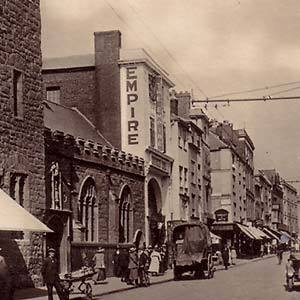 The Empire Electric – thought to be Exeter’s first purpose built cinema. Opened in 1910 and destroyed in 1942. Image supplied by Jon Bell.
The talk looked at the impact of the construction of the large 'super-cinemas' in Exeter in the pre-war years; their architecture was controversial, but their popularity undoubted. More used to serving others than being served by commissionaires and usherettes, many working-class women attended the cinema as often as they could, sometimes five nights a week.
These grand 'picture palaces' replaced the smaller local cinemas that had been opened in the years since the first showing of moving pictures in 1896. Often quite basic, these establishments were often locally recalled fondly as being 'flea-pits!' The larger cinemas were usually equipped with large theatre organs and those who played them became local celebrities. The map in Gordon's book shows the location of Exeter's former cinemas: City Palace, 1912–1932/Lounge, 1932–1942, 79 Fore Street Exeter [lost in the Blitz] and the Franklin Picture Palace (and Franklin Private and Commercial Hotel where Artful Thomas worked up until 1924 and used to spray audiences with disinfectant and Charlie Chaplin films were shown), c.1912–1923.
The coming of Hollywood films in the 1920's presented a challenge to the British film industry, which received government support via a requirement to show a percentage of locally produced films. Cheaply produced, these so-called quota-quickies were the launching pad of a number of British film directors, including Michael Powell. The 1930's saw the music hall comedians becoming featured in films, including the likes of Will Hay and George Formby.
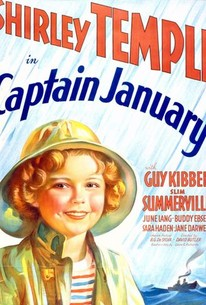 The Savoy, later the ABC, opened on November 22nd, 1936, with a showing of the Shirley Temple film “Captain January”. Image supplied by Jon Bell.
The '30's also saw the development of documentary films whose techniques found their way into many war-time films. A number of Exeter cinemas were either destroyed or damaged during the war. Post-war innovations included 'Saturday Clubs' for children at The Gaumont, ABC and Odeon. The era also saw the development of ambitious 'epic' films in an attempt to compete with television. Nonetheless, 1946 represented the most successful year ever for cinema in this country, after which numbers attending fell rapidly. An attempt to maintain profitability included the larger cinemas hosting pop-music concerts in the 1960's, including the ABC in Exeter featuring concerts by The Beatles. Nonetheless, when the ABC closed in 1987, it left only the Odeon as a full-time Cinema in Exeter. A song, 'Stairway to the Stars' recalled the golden years and mourned the passing of such significant icons of popular culture. Recent years have seen a revival with both the Picture House and Vue opening their doors. But the likelihood of a true revival of the pre- and post-war years is unlikely, and the talk finished with the recording of a comic song, 'The Flies Crawled Up The Window' from a 1939 film, 'Jack's The Boy' that had attracted huge audiences that year at the Exeter Gaumont.
Précis of the talk has been written by Jon Bell (with images), with additional material from Sue Jackson.
Note — Our Secretary, Sue Jackson says: "This talk was particularly relevant to the co-author of this write-up as Gordon Chapman (now
deceased) had been my next-door neighbour for a number of years and he had asked for my memories of the various establishments he was researching. Such help was limited as many of them had
disappeared from Exeter before I was born (1947) and even more had been lost in the Blitz of 1942, although I remember my mother talking about them. But I have a copy of Gordon's book, which helped
to inform the write-up of Jon's talk. He mentioned several films that had been shown including Captain January with Shirley Temple (plus a clip from the film with Shirley singing), Robin Hood,
Michael Powell in The Phantom Light, Charles Laughton in The Private Life of Henry VIII, the mail carrying night train, Bernard Shaw in The War Years, the 1942 film Went the Day Well, and the very
popular Mrs Miniver (a 1942 war drama film starring Greer Garson and Walter Pidgeon), Noel Coward in In Which We Serve, and the most popular film of all Bing Crosby and Ingrid Bergman in The Bells of
St Mary's (a film I refuse to wipe off my TiVo box). Many of those attending the talk remembered Saturday morning pictures for children at the Odeon and the ABC. Jon's talk was a lively affair with
lots of film and audio clips, images of cinemas, facts and information about attendances. A talk enjoyed by all."
Sue Jackson
 Print
Print 