2026
| 08/01/2026 | Exeter Guildhall and Mace Sergeants | / talk by Jerry Glazier |
| 12/02/2026 | Lady Harriet's American Adventure—1776-1778 | / talk by Dr Robert Guyver |
| 21/02/2026 | Exeter History Book Festival | / event with Dr John Pamment Salvatore, Dr Todd Gray, Dr Andrew Thrush, Tracey Norman, and Mark Norman |
| 12/03/2026 | Stairways to the Stars – Cinemas in Exeter in the Golden Age | / talk by Jon Bell |
| 19/04/2026 | Spellbound: Witchcraft in Exeter, 1563-1736 | / talk by Professor Mark Stoyle |
| 28/05/2026 | Through the Windows of an Ordinary House: A History of England | / talk by Dr Ian Mortimer |
| 11/06/2026 | “Exeter Cathedral: A Thousand Years of Treasures” | / talk by Emma Laws |
| 09/07/2026 | Vikings in the West Country | / talk by Derek Gore |
| 13/08/2026 | A walk around Newtown | / walk with Jackie Holdstock |
| 10/09/2026 | Charlotte Burrow and her letters from Regency Exeter | / talk by Christopher Lewin |
| 08/10/2026 | Hidden Treasures: Exeter’s Library and Literature Heritage | / talk by Dr Clare Maudling |
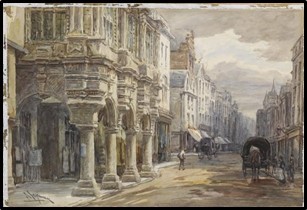
Exeter’s Guildhall and its Mace Sergeants from inception to the present day
with Jerry Glazier on Thursday, 8 January 2026
at 7pm at Leonardo Hotel Exeter [Jurys Inn Exeter Hotel]
There has been a Guildhall in Exeter since at least 1160, with the current building dating from 1330. The building has played a significant, multifunctional role in the city's development since medieval times. Undergoing a number of significant building upgrades, the Guildhall was able to better meet the enhanced demands placed upon it.
Mace Sergeants were appointed by the City Chamber, for the first time, in 1263, expressly to look after the Mayor and Courts in the city.
Jerry Glazier, a serving Mace Sergeant, talked about the Guildhall and the role of the Mace Sergeants, from their inception to the present day.
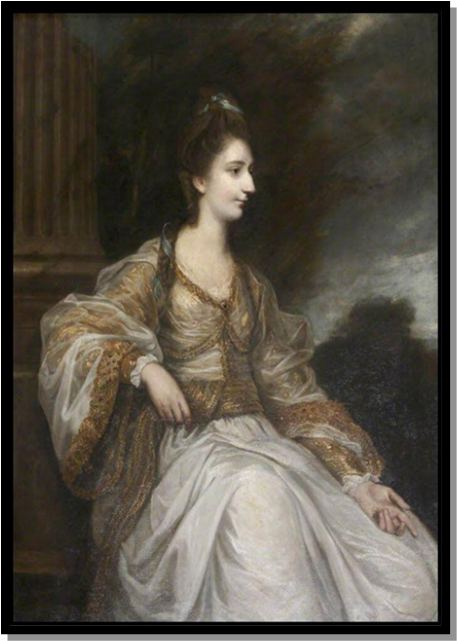
“Lady Harriet’s American Adventure—1776-1778”
with Dr Robert Guyver on Thursday, 12 February 2026
at 7pm at Leonardo Hotel Exeter
Following a brief AGM of the Exeter Local History Society, Dr Robert Guyver gave an illustrated talk about Lady Harriet Acland and her American adventures.
Lady Harriet Acland (née Fox-Strangways) (1749-1815) was the daughter of Henry Fox (later Fox- Strangways), the 1st Earl of Ilchester.
On 7 January 1771, she married John Dyke Acland, heir to Sir Thomas Dyke Acland, 7th Baronet. Her husband John was a Tory MP for Callington, whereas Lady Harriet came from a Whig family (Charles James Fox, the radical MP, was her first cousin). The couple would have three children: Elizabeth (Kitty), Theresa, and, later, John.
In April 1776, leaving her two daughters behind with her mother at Redlynch near Bruton, she accompanied her husband, a Major in the 20th Foot, and his regiment by troop ship to Canada. She witnessed two military campaigns: in 1776 and in 1777. She kept a journal, in which she recorded her amazing adventures.
Lady Harriet appears to have been an intrepid character. When her husband, John Dyke Acland, was wounded at the battle of Saratoga, Lady Harriet crossed the River Hudson at night, bearing a letter from British General Burgoyne to American General Gates, requesting access to her husband who had been wounded in both legs. Subsequently, John Dyke Acland was released and they were able to return home.
Our speaker is Dr Robert Guyver, a local historian and researcher, who might be familiar to the members from his fascinating talk about General Redvers Buller in November 2023.
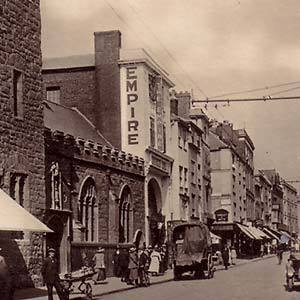
“Stairway to the Stars”
by Jon Bell on Thursday, 12 March 2026
at 7pm at Leonardo Hotel Exeter
Jon Bell, an Exeter Redcoat Guide, presented a talk on the Golden Age of Cinema in Devon, focusing especially on Exeter.
This was the story of cinemas in Devon during their ‘golden age,’ roughly from the 1920’s to the 1960’s, with a bit of a glance at both earlier and later times.
The talk discussed the cinemas, the people who built them, the audiences, and some of the films they went to see.
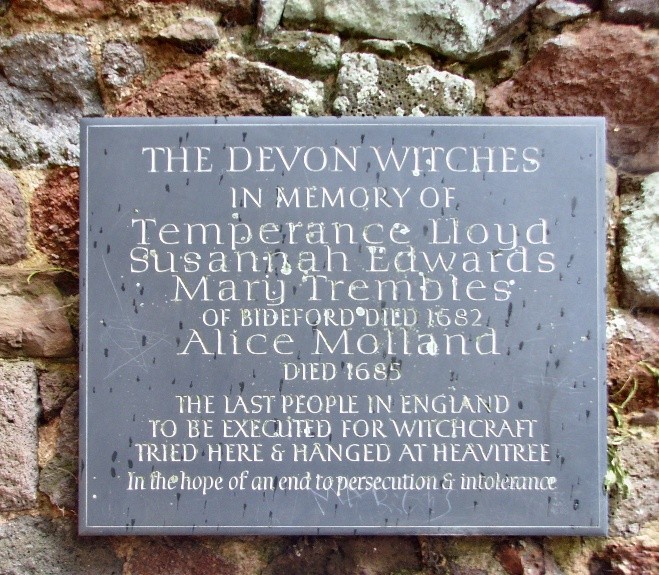
Spellbound: Witchcraft in Exeter, 1558-1682
with Professor Mark Stoyle on Thursday, 9 April 2026
at 7pm at Leonardo Hotel Exeter [Jurys Inn Exeter Hotel]
The ancient city of Exeter is the last place in England where people are known to have been hanged for the supposed crime of witchcraft. The case of the three North Devon women who were executed here in 1682 - the so-called ‘Bideford Witches’ - is now deservedly well-known. Yet the fact that Exeter had a much longer history of witch-trials - and witch-executions - is usually forgotten. This talk told the stories of some of the unfortunate men and women who were denounced to the city magistrates as witches between 1558 and 1670: the period during which the great majority of witch-prosecutions occurred. Tracing a series of cases from accusation to trial, to sentence - and sometimes all the way up to the gallows itself - the talk shed powerful new light on occult belief in Tudor and Stuart Exeter, and on the dark, uneasy world of the urban ‘witch’.
Mark Stoyle is Professor of Early Modern History at the University of Southampton, and his research interests include witchcraft, Tudor rebellions, and the English Civil War. He has written many monographs and scholarly articles and his latest book - The Western Rising of 1549 - was published in paperback by Yale University Press in 2024. Mark has served on the council of the Royal Historical Society, on the advisory board of the Victoria County History, and on the editorial advisory panel of BBC History Magazine. He has also appeared on many radio and TV programmes.
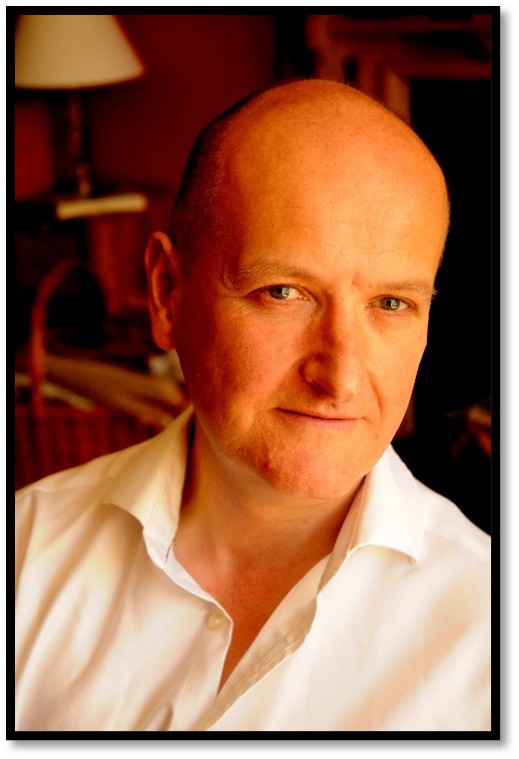
Through the Windows of an Ordinary House: A History of England
with Dr Ian Mortimer on Thursday, 28 May 2026
at 7pm at Leonardo Hotel Exeter [Jurys Inn Exeter Hotel]
Our national history is a patchwork quilt of stories – the North in the Industrial Revolution, the London of Samuel Pepys’s diary, and so on. How would it look if it were written from one point of view? And what if that point of view were here in Devon, on the edge of Dartmoor?
Ian Mortimer has spent the last few years writing an experimental book, “Through the Windows of an Ordinary House - A History of England” showing how the national story differs hugely according to where you were living. He looks at how the history of England would have appeared to the people who lived in his house (and previous houses on the site) since Saxon times. It is hoped that the end result will be nothing less than ‘a glimpse of a thousand years’.
As a prelude to publication in September, this was an illustrated introduction to the house itself and the people who lived in it since the thirteenth century, together with a view of the origins of the settlement.
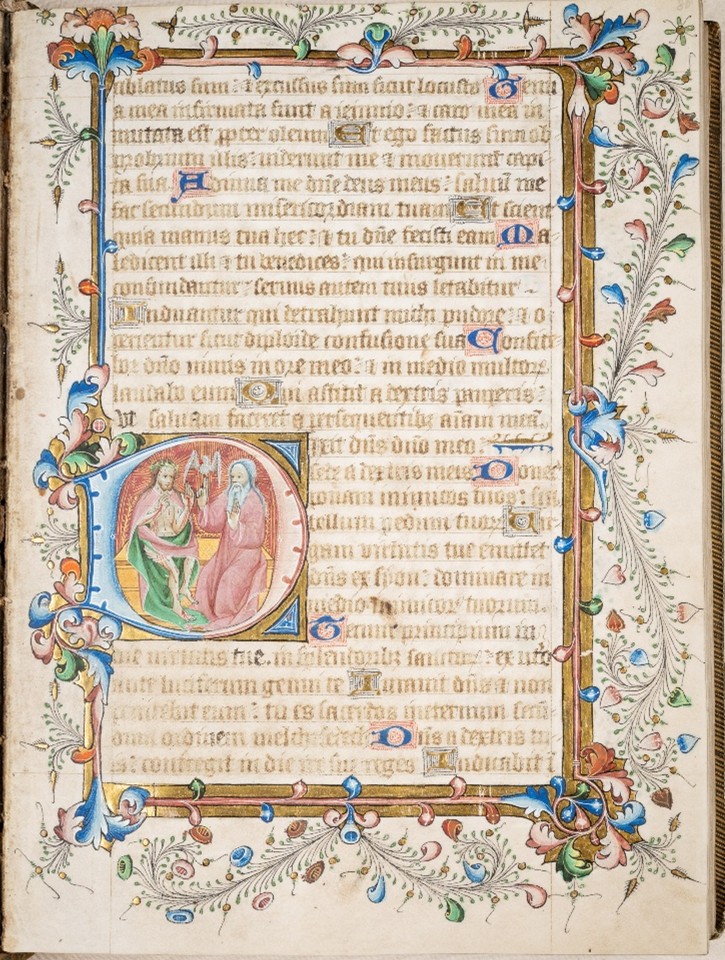
A Thousand Years of Treasures
with Emma Laws on Thursday, 11 June 2026
at 7pm at Leonardo Hotel Exeter
Exeter Cathedral, founded in 1050 under Bishop Leofric, is not only an architectural masterpiece. It is also a home to a rich collection of manuscripts and historical artefacts.
Our speaker, Emma Laws, is a librarian at Exeter Cathedral's Library and Archives. In 2024, she gave us a talk on the Exeter Book, a famous collection of medieval poetry, which has been at Exeter Cathedral since Leofric, the first Bishop of Exeter. In June, she talked about the history of Exeter Cathedral's treasures from the foundation of the brand new Friends Cloister Gallery and Treasures Exhibition.
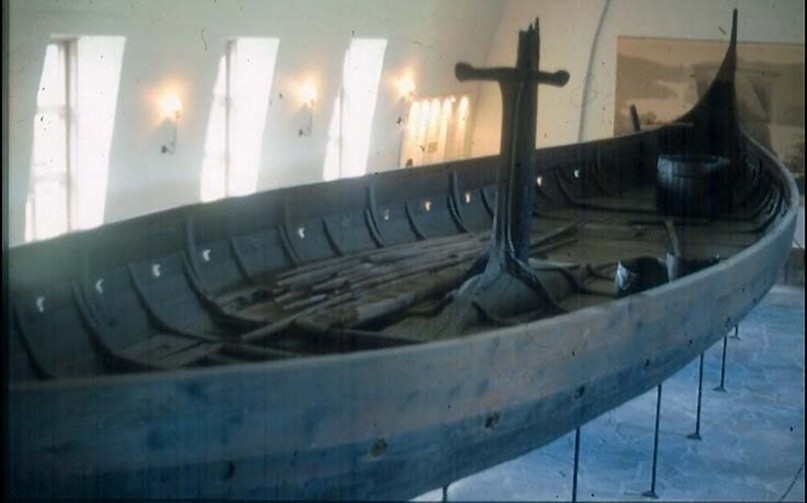
The Vikings in the West Country
with Derek Gore on Thursday, 9 July 2026
at 7pm at Leonardo Hotel Exeter
For a long time, it has been suggested that the Vikings largely ignored the South West despite mention of their activities in documentary sources.
Studies of the period in the last twenty years show that this is false. In addition to the written sources, small finds from this period, found largely by metal detectorists, research on names and place-names, and stone sculptures paint a different picture. The Vikings raided, traded, and to some extent settled in this area. They also maintained contacts between the peninsula and the Frankish Empire and Ireland in the period.
This talk by Derek Gore, an Exeter-based archaeologist, offered a more accurate picture by examining and illustrating all strands of evidence for Viking activities in this area.
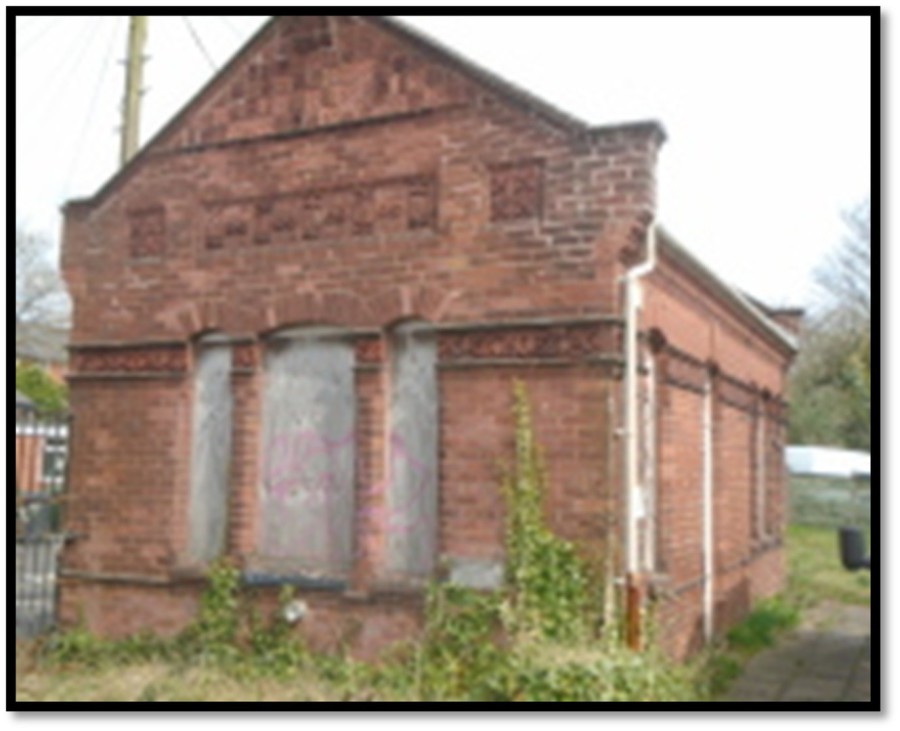
A walk around Newtown
Led by Jackie Holdstock on Thursday, 13 August 2026
at 2pm at Waitrose car park (near the cash machine)
Jackie, our knowledgeable Exeter Local History Society member, led us on this summer walk around Newtown.
The image above is just one of the surprising features of the area, and it is likely that many of us will never have noticed it before!
Newtown is, in fact, one of the older parts of Exeter and consists of the area between Polsloe Road, Blackboy Road, part of Western Way, and the north of Magdalen Road.
“Charlotte Burrow and her letters from Regency Exeter”
with Christopher Lewin on Thursday, 10 September 2026
at 7.00pm at Leonardo Hotel, Exeter
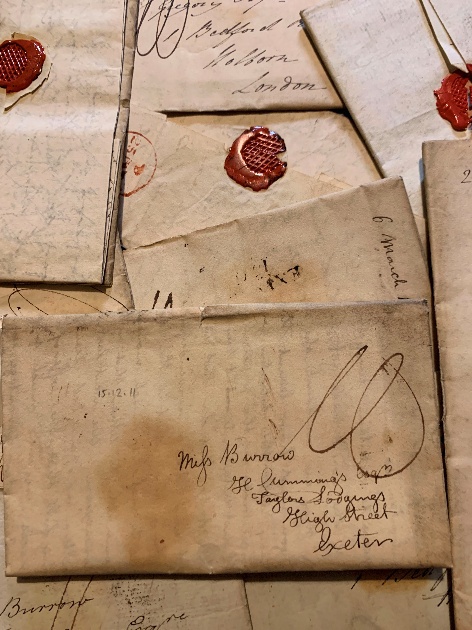
Ten years ago, Christopher Lewin bought, on eBay, an unknown archive of letters written in the Regency period. The dealer was planning to sell them individually if the archive remained unsold, in which case the present story would never have emerged. The letters bring to light a fascinating correspondence from 1808 to 1811 between a young woman in Exeter and her friend in London. Their friendship gradually blossoms into romance, though with some bumps along the way.
In his voyage of discovery, Christopher Lewin found that the letters contain a considerable amount of information about the people Charlotte meets, and in particular about William Nation, merchant and banker, and his daughter Eliza, who live in Southernhay.
Charlotte and her sister become orphans and are left in the care of a guardian. At the age of sixteen, Charlotte is sent to London, where she joins the household of the Reverend George Gregory and his wife. She becomes friendly with their son John. At the age of twenty-four, she visits Exeter for three prolonged visits, and corresponds with John Gregory, who remains in London.
Christopher Lewin writes, “Shining through these letters is Charlotte’s forthright but compassionate and endearing personality. Her life turns out differently from that of Jane Austen, her contemporary from a somewhat similar background.
My book ‘Charlotte Burrow: A Real-Life Regency Romance’ will be published by Author Gate later this year. Readers will hopefully enjoy this true account, told in the participants’ own words while it progresses and quite distinct from the many existing fictional romances of the Regency period. The book contains some of the interesting new insights into Exeter’s social history which emerge from the letters and my talk will include additional information of this nature.”
“Hidden Treasures: Exeter’s Library and Literature Heritage”
with Clare Maudling on Thursday, 8 October 2026
at 7.00pm at Leonardo Hotel, Exeter
Dr. Clare Maudling is a multi-disciplinary researcher and former library professional. She spent fifteen years working in specialist libraries, including the Exeter Performing Arts Library and the Westcountry Studies Library, before undertaking postgraduate study in history at the University of Exeter. Born in Exeter, Clare’s interest in history was inherited from her parents. She developed a love of architectural history, and her main research interest is the evolution of urban planning and housing in the UK. She completed her PhD in Exeter, Plymouth and Bristol in 2018, after a decade of research into post-war rebuilding. After graduating, Clare worked in heritage, working for Exeter Historic Buildings Trust and the Devon and Exeter Institution. Clare is currently a post-doctoral research fellow with the University of Exeter.
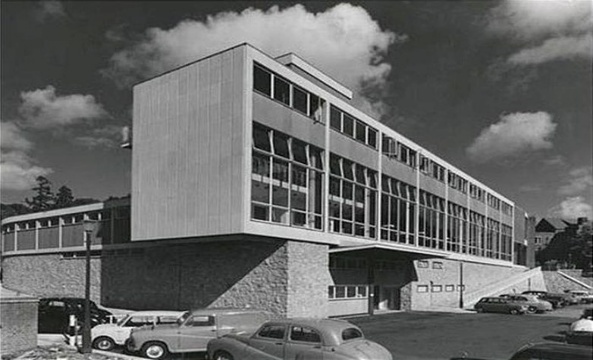
Clare says — “In 1904, Harry Tapley-Soper, the new city librarian, began lobbying Exeter City Council for a new library, as the one he had inherited was bursting at the seams and was no longer fit for a modern city.
A mere 26 years later, the new City Library finally opened, beset along the way with concerns about cost, the necessity of providing such a facility, and the demands of an American steel magnate… This episode in the city’s library provisions reflects a long history of unexpected arguments and actors. An ancient place of worship, a new art school, an 18th-century execution, some one-upmanship, and a large stuffed brown bear, all take their place in the story of our libraries and their books.
The city is home to books of international significance, and the buildings which house them have their own fascinating stories to tell, forming part of a larger narrative of literacy, literary and scientific thinking, and the expansion of what it means to be a library in the modern age.
This talk took a trip through the city’s history via its libraries, from the early foundations of the Cathedral Library to the 170 years of public library service, telling the stories of those who created our libraries and the changes across the centuries.”
 Print
Print 