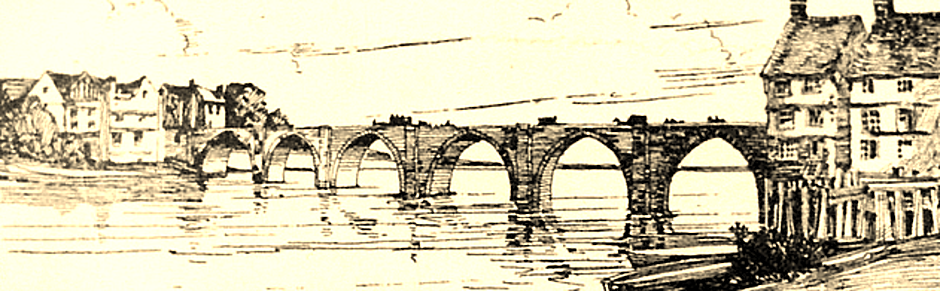
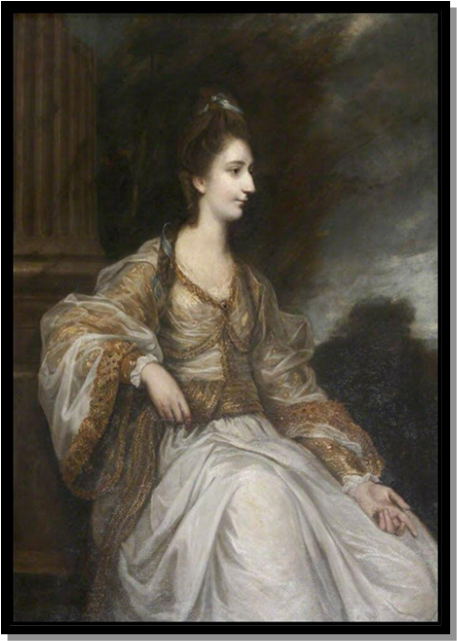
 Lady ‘Harriot’ Christian Henrietta Caroline Fox-Strangways, Mrs John Dyke Acland (1749-1815) by Joshua Reynolds c. 1771. Public Domain. On display at Killerton House.
“Lady Harriet's American Adventure—1776-1778”
with Robert Guyver on Thursday, 12 February 2026
at 7pm at Leonardo Hotel Exeter
Early life and meeting John Dyke Acland
Lady Christian[a] Henrietta Caroline [Harriet or Harriot] Acland [née Fox-Strangways], (1750–1815) was born at Kilmington, Devon, on 3 January 1749 and baptized on 16 January 1749 at St James’s, Piccadilly, London. Because the Aclands had a property at Tetton (near Taunton) in Somerset, and Lady Harriet’s family lived at Redlynch near Bruton, also in Somerset, they may have known each other in Somerset, the families mixing in a local like-minded social group. Lady Harriet’s father Stephen had become the 1st Earl of Ilchester in 1756.
The wedding, his parliamentary forays and hints of war
Lady Harriet, having just had her 22nd birthday, married John Dyke Acland on 7 January 1771 at Bruton in Somerset, near her parents’ house at Redlynch, the couple having applied for a special licence on 29 December 1770. John Dyke Acland was aged 23. The couple were given the Acland family properties of Pixton (near Dulverton) and Tetton (near Taunton) on marriage.
John became Tory MP for Callington in 1774, and would speak in Parliament particularly about the need for strong local militias in England, both to supply a national army in the case of war, and to put down possible local unrest. He was already involved in the East Devon Militia, becoming its Colonel while still in his 20s. He would also become a Major in the 20th Regiment of Foot. Trouble was brewing in North America with the ‘Boston Tea Party’ happening on 16 December 1773, and the battle of Lexington and Concord on 19 April 1775.
Leaving the children with her mother and getting to Cork
Lady Harriet’s Journal indicates that she set out from Redlynch on 1 March 1776, her mother’s house near Bruton in Somerset, on her way to Holyhead to cross the Irish Sea. There she would have left her two children, Elizabeth Kitty, aged about 4, as well as Kitty’s younger sister Theresa. Lady Harriet’s father would die later that year (29 September 1776). On the way to Holyhead Lady Harriet and her party (consisting of at least her servant Sarah Pollard, but also her [large] Newfoundland dog, Jack Ketch) stopped at Gloucester, Ellesmere and Conway. Within Ireland they stopped at Dublin and Carlow before reaching Cork on 9 March. Major John Dyke Acland’s 20th Regiment of Foot set sail in HMS Kent on 5 April 1776. Lady Harriet’s brother, Captain the Hon. Stephen Strangways, was with the 24th Regiment of Foot on the Lucretia.
The Sea Voyage
The party was at sea between 5 April and 26 May. On 26 April a soldier died, he was buried at sea. On 3 May Lady Harriet saw four ‘mountains of ice, one very large’. On 19 May another soldier died. Apart from Lady Harriet and her servant Sarah Powell, there were other women and even some children on board (children ill with the measles noted on 8 May). They saw icebergs and porpoises as well as puffins (described wrongly by Lady Harriet as penguins). Various other birds were noticed, and there even attempts to catch some and put them into an aviary, and this succeeded on 14 May. On 10 May the first land had been spotted, and was off the coast of Newfoundland – with St Pierre on one side and Cape Breton Island on the other. An aurora borealis was seen on 16 May. Later (25 May) Lady Harriet saw belugas (described as large white porpoises). Several occasions are mentioned when ships in the fleet managed to communicate with each other or with passing ships.
Landfall, log-cabin and an Indian dance
The two most significant events in this part of Lady Harriet’s Journal are first an encounter on 26 May with a large (probably French-speaking) settler family (father’s name: Louis Tremblé) in a log cabin on the Isle of Coudres in the St Lawrence River. Secondly on 31 May, still in the Quebec area, at what was known as Jeune-Lorette (now as Wendake) she witnessed a ceremony involving a group of First Nation people (the Huron-Wendat), including their Chief, digging up the hatchet and vowing allegiance to the British Crown. A horned oxe’s head was cleft in half, and there was dancing. ‘Upon the whole’, she wrote, ‘it was a curious but a very horrible & disagreeable sight’.
End of the first year
After 1 June 1776 various movements and mostly minor military encounters are described until 17 November when the army hunkered down for winter in Verchères, up-river from Montreal. Initially based at Quebec, Lady Harriet heard of engagements at Trois Rivières (just south-west of Quebec) on 9 June, and Sorel on 18 June. She set out from Quebec for Montreal on 24 June (the British having taken possession of Montreal on the 14th). On the way she stayed in ‘an exceedingly bad house and a very impertinent landlady’. She arrived in Montreal on 26 June. By 2 August Lady Harriet was staying at Fort St John, north of Lake Champlain. She moved further north to Fort Chambly where she nursed Major Acland through an unspecified illness. They both left on 9 August to return to Montreal, which Major Acland left on 5 September to go back south to the Isle aux Noix. He must have returned to Montreal as the Journal has him setting out again from Montreal for the Isle aux Noix on 20 September. The fleet with which Lady Harriet and Major Acland had come over from Cork were engaged at the battle of Valcour Bay on 12-13 October. The so-called rebels evacuated Crown Point south of Lake Champlain and retreated to Ticonderoga.
Into the next year and fire in the tent
The River St Lawrence became passable at Verchères only on 5 April, and Major Acland made his way north-east to Quebec. On 6 May General Burgoyne arrived in Quebec from England. Lady Harriet came to Montreal on 3 June. By this time Major Acland had special command of 30 Grenadiers, and Lady Harriet gave each of them half a Cheddar cheese when they left Montreal. On 13 June she heard about the battle of Hubbardton (much further south near Ticonderoga) which had been fought on 7 July, but at which her husband had been wounded. She decided to travel south to join him. On 18 July she reached Mount Independent where Major Acland was. He left the following day to join the Army at Fort Edward, further south. Lady Harriet followed him via Fort George, arriving at Fort Edward on 17 August. On 21 August the Army was poised to undertake a major engagement and took up a position on the heights near General Shuyler’s Saratoga house. On 21 August she went to the Army camp near Batten Kill and remained there until 13 September. On 15 September when they were together (probably at Dovegot, modern Coveville according to Thorp), Aclands’ large Newfoundland dog, Jack Ketch, tipped over candles in their tent and caused a fire. Lady Harriet escaped out of the back of the tent but Major Acland, who was rescued, did incur some burns. By this time Lady Harriet was 3 months pregnant (she would give birth in New York on 2 February).
Saratoga (Bemis Heights), John’s wounding and capture, advice received from Baroness Riedesel, crossing the Hudson
This seems to have been a series of engagements across more than a fortnight, from 19 September to 7 October (1777). In her Journal entry for 19 September Lady Harriet notes several military details like the composition of three columns when they moved off. These were driven back. She also noted for that day ‘at this time began a fire, perhaps the severest & best supported ever known, which last[ed] 5 hours & [a] half with only momentary interruptions, & was at length terminated by the night’. The strength of the American side stopped the left of the three columns from being brought into action. The 62nd Regiment suffered killed and wounded about 2/3rds of its number. She was very close to the action, being in the British camp only within a mile and a half of the enemy camp. Her next entry is for 7 October when she noted that the enemy had very superior numbers and had captured up to 9 artillery pieces of different sizes. ‘Towards the close of evening Major Acland was wounded through both his legs and notwithstanding every effort was made to carry him off it was found impossible, & he of course fell into the enemy’s hands.’ The British army withdrew and ‘… a cannonade commenced on both sides, which lasted till it was dark’. Lady Harriet was in the thick of it.
From other sources, including the memoirs of Major-General von Riedesel’s wife, we discover that Lady Harriet witnessed wounded and even dead soldiers were being brought in to a makeshift field hospital. The wounded included Major Harnage of the 62nd (his wife who was present), and the dead or dying included Lieutenant Reynell and General Fraser. Lieutenant Reynell’s wife was present when he died. Frederike von Riedesel recommended to Lady Harriet that she should seek out Lord Petersham, General Burgoyne’s aide-de-camp, and request via him that General Burgoyne write on her behalf a letter to American Major-General Horatio Gates that she be given permission (a laissez-passer) to cross enemy lines to locate her wounded husband.
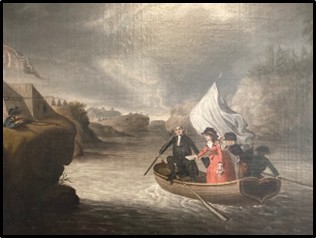 Lady Harriet Fox-Strangways (1750-1815), Mrs Acland, Crossing the River Hudson to the American Lines, Presenting Her Safe Conduct. Public Domain, on display at Killerton House.
The famous Robert Pollard painting (later reproduced as a print) shows what happened on the night of October 9-10 when Lady Harriet’s party crossed the River Hudson at Stillwater. Lady Harriet is depicted brandishing General Burgoyne’s laissez-passer letter. The Reverend Edward Brudenell is seen holding up a large white flag, and the servants are there to support it might be deducted that the person rowing the boat is Matthew Nation, John Dyke Acland’s valet-de-chambre (who was wounded a few days before) and Sarah Pollard is standing right behind her mistress.
The guard who is seen in the Pollard image may have kept them waiting until daybreak. There are conflicting accounts. But eventually the party was taken to see General Gates, whose subsequent comments in correspondence show how impressed he was with Lady Harriet. Burgoyne later wrote that ‘… she was received and accommodated by General Gates with all the humanity and respect that her rank, her merits and her fortunes deserved’. Lady Harriet’s brother Stephen was also wounded at Bemis Heights. He would be transferred to Boston where he would remain as a prisoner.
John’s nine weeks convalescence in the Schuyler Mansion
The British surrendered on 17 October. Immediately after this, and over the period 18 – 27 October 1777 there was a large party staying at the Schuyler Mansion in Albany, being catered for by General Schuyler’s wife. This included General Burgoyne and the officers who were attending him. The Schuyler children were also in the house running around and getting used to a new situation. Their 9-year-old son Philip went into a room where several of these soldiers were encamped and laughing announced ‘You are all my prisoners’, which depressed them. After the other military prisoners had left (to be held at Prospect Hill Barracks in Boston), the Aclands and their servants stayed on. General Schuyler’s personal doctor is likely to have attended on John Dyke Acland who was bed-bound for 9 weeks and one day, only able to get up, according to Lady Harriet’s journal, on 10 December. The generosity shown by the Schuylers (General Schuyler himself was attending to business at his other property near Saratoga) deeply touched all who had been there at this difficult time, no doubt – and especially – the Aclands, although the Schuylers do not get a mention in Lady Harriet’s Journal. According to Strich, General Burgoyne had been moved to tears by their hospitality.
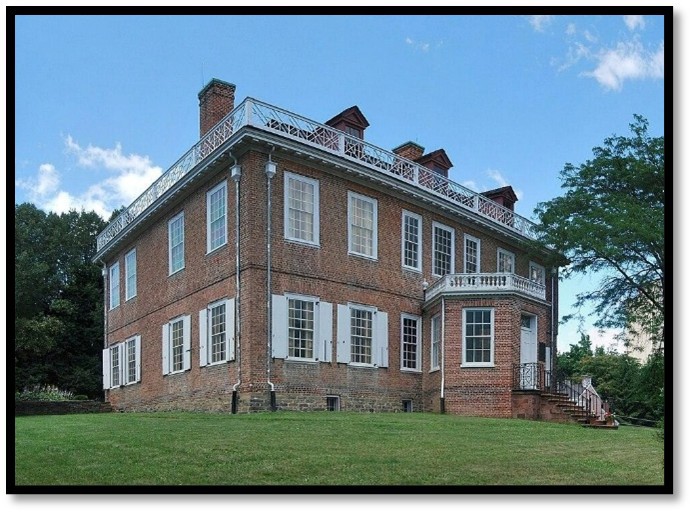 The Schuyler mansion - Matt Wade image (see File:Schuyler Mansion Panorama Left.jpg – Wikimedia Commons)
Going south under escort – meeting Mrs Montgomery, her mother’s family and her ‘servants’
On 27 December 1777 the Acland group – Lady Harriet, her husband John, with a group of servants including Sarah Pollard and Matthew Nation, left the Schuyler Mansion in Albany escorted by (American) Colonel Henry Brockholst Livingston. They stopped at several places on their way south down the Hudson Valley to New York. Significantly on 29 December they stayed overnight at the substantial house Grasmere in Rhinebeck, the overcrowded home of a distant relative of Colonel Livingston’s, Janet Livingston Montgomery, widow of American Major-General Richard Montgomery, who died in battle at Quebec on 31 December 1775. Also staying in this house, having been forced to move when their nearby house Clermont was burnt down by British troops under Lt-General John Vaughan, were Margaret Beekman Livingston, the mother of Janet, 5 unmarried daughters of Margaret Livingston and a teenage son, and close to a dozen enslaved people who had also been part of the Clermont household. Also, there was probably Mary Stevens Livingston (wife of Chancellor Robert R. Livingston, the Judge and Margaret’s oldest son). [Note: thanks to Geoff Benton of the NY State Parks Department for this information.]
New York: Birth and baptism, and sailing home
New York was reached on 2 January 1778. Lady Harriet gave birth to a son on 2 February. He was baptised John Dyke Acland on 24 February 1778 by the Reverend Charles Inglis at Trinity Church Wall Street. The sponsors or godparents were Deborah Sutherland (who may have been an American), Governor William Tryon, and Lt-General Vaughan. On 23 March the Acland group set sail from New York in the Earl Bathurst, an armed merchant ship, arriving in Plymouth in late April or early May. They were greeted by cheering crowds as they passed through Exeter, according to one newspaper.
Entertaining at home, trouble brewing, the duel and John's death
Back at home John was summoned to see King George III who was still angry with General Burgoyne for the defeat at Saratoga. He listened to John’s memories of the engagements in North America. In John’s continuing capacity as Colonel of the East Devon Militia, he and Lady Harriet kept a house in Exeter where they did some entertaining. A young Lieutenant (John Lloyd) who was also in the 20th Regiment of Foot, found that senior officers (some of whom might have been upset by his behaviour) wanted him excluded from mess dinners. This exclusion led Lloyd to complain by letter to John Dyke Acland who took the complaints to be a challenge to a duel. A duel did take place near Bampton Down on 11 November 1778. Matthew Nation, John’s servant, was his second, and an Ensign John Rickey (of the 50th Foot) was Lloyd’s second. Apparently, according to Nation’s 11-page eye-witness account, no effective shot was fired (Lloyd had fired once, but missed, and Acland’s two attempts were put out by the wind and rain). Both men walked away unharmed. However, later that day Acland collapsed from a seizure, hit his head on falling, and died at Pixton 4 days later on 15 November 1778. His father, Sir Thomas, in his account books described his son as having had an illness, and that on the day before his death he had been ‘dangerously ill’.
Further distress, and a family wedding
Across March and April 1785 there were three baronets. Lady Harriet’s father-in-law Sir Thomas – the 7th Baronet – was buried on 9 March, and Lady Harriet’s only son, aged 7, briefly Sir John Dyke Acland – who had for just a few weeks been 8th Baronet – was buried on 23 April. The baronetcy goes to John’s younger brother Thomas (1752-1794) who became the 9th Baronet.
In 1796, Elizabeth Kitty, daughter and heiress of John and Lady Harriet Acland, married Henry Herbert, Lord Porchester, later the 2nd Earl of Carnarvon, thereby bringing the Somerset estates of Pixton and Tetton to the Herbert family. Her portrait now on display at Highclere Castle shows what amounts to a remarkable likeness in features and character to her mother. She had several children, and it is known that Lady Harriet would travel to old Highclere (not the mid-19th century house which appears in the TV series Downtown Abbey) to see her daughter and her grandchildren. Elizabeth ‘Kitty’ died in 1813, before her mother.
After the end — an epilogue
Lady Harriet's funeral was at Broadclyst on 28 July 1815. She was 66 years old. Her body was brought from Tetton House near Taunton.
[ With thanks to our speaker and author of this write up - Robert Guyver - 16/2/2026 ]
 Print
Print 